
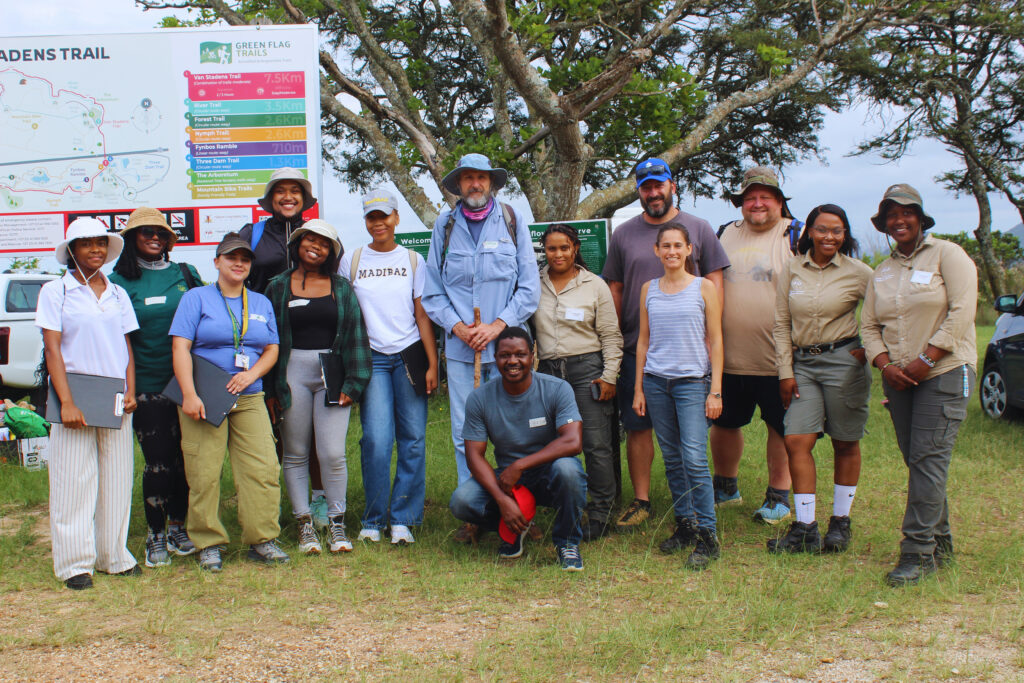
Recently, the Wildflower Reserve shifted into something even more powerful than a protected natural space, it became a living classroom for second-year Pedo-Geomorphology students from Nelson Mandela University, who arrived to step directly into the landscape they study on paper.

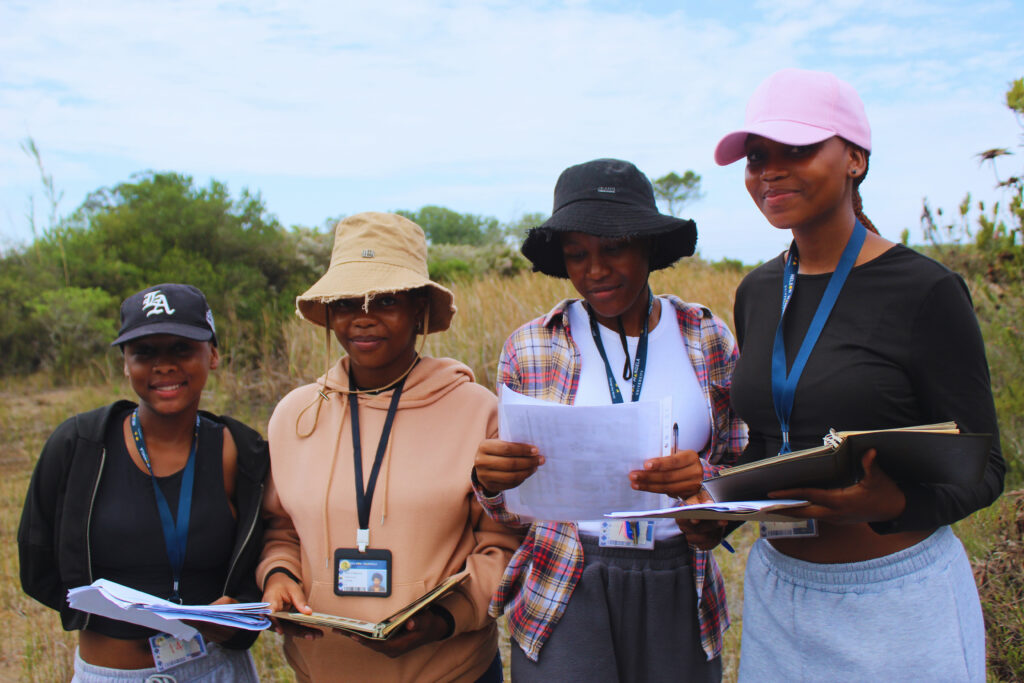
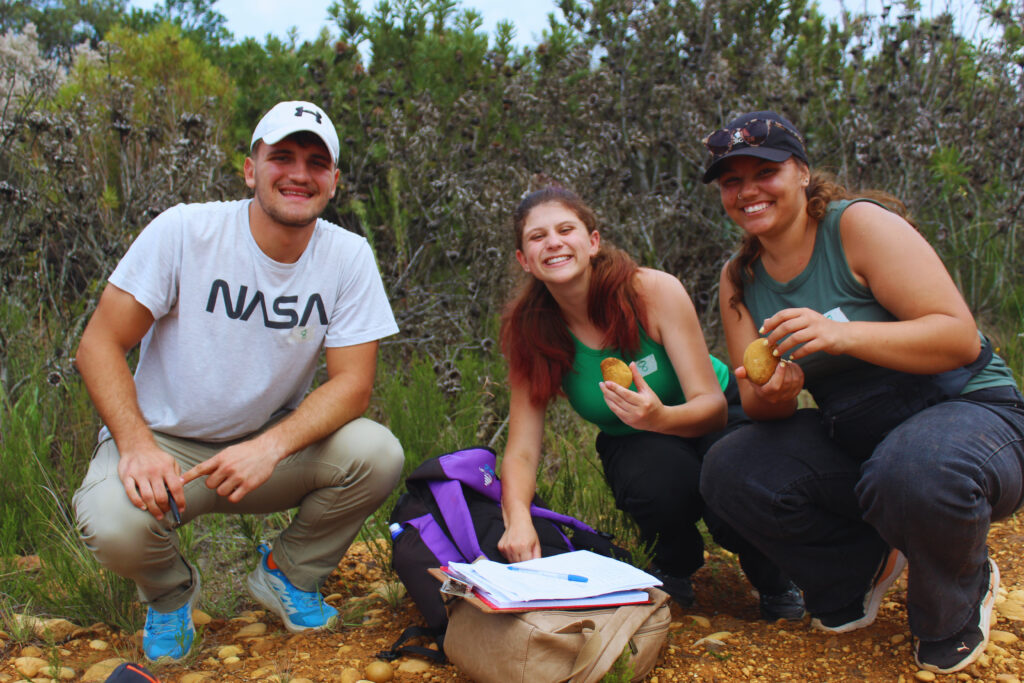

Around 120 geology and geography students, together with lecturers and demonstrators, spent a day exploring how soils, landforms, and water systems shape the landscape beneath our feet.
What made this visit especially significant was the timing. The wetlands and dams near the Reserve entrance had recently dried enough to allow safe access, revealing soil surfaces that are usually hidden. In many ways, it was a rare window into the inner workings of the landscape, perfectly suited for field-based learning.
Armed with augers and notebooks, students carefully extracted soil profiles, describing each horizon in detail, from colour and texture to structure, consistency, and carbonate presence.
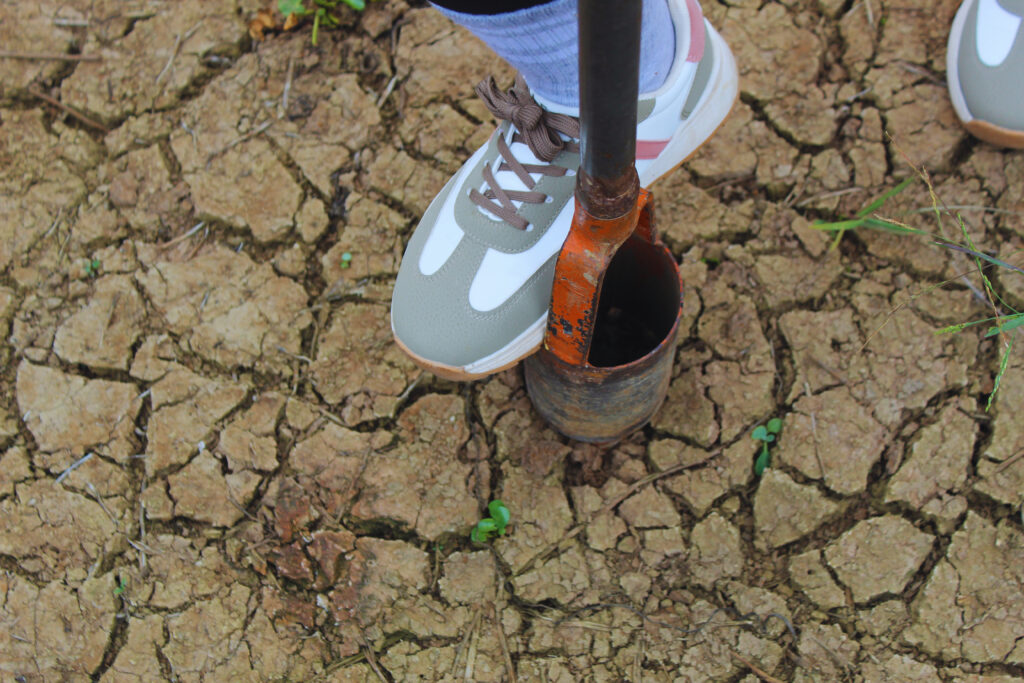

Small subsamples were taken for analysis, while the majority of material was returned to the ground, leaving the site gently restored after each excavation.
But the learning went far beyond the soil pits. Students examined mud cracks formed by drying cycles, studied iron nodules scattered across wetland floors, and measured pebbles and cobbles exposed in nearby areas to better understand sediment movement and deposition patterns. Even the landscape’s smallest details became data points in a much larger story of change, water flow, and time.
Throughout the day, the Reserve revealed itself not just as a backdrop for learning, but as the lesson itself. Every slope, soil layer, and dry wetland surface offered insight into processes that shape landscapes over thousands of years.